Find Out More
Epidemiologists design and conduct investigations aimed at improving the health of groups of people by combining knowledge from the social sciences, medicine, biology, the environment, and statistics.
April 29, 2026 | Erin Bluvas, bluvase@sc.edu
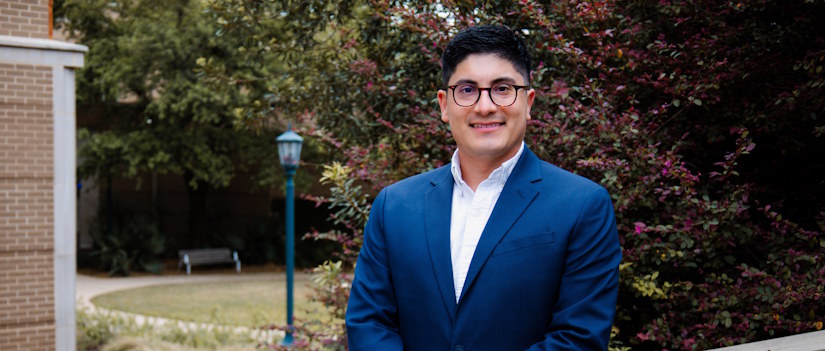
Originally from El Salvador, Carlos Avalos grew up in South Florida, where his high school years were marked by his dad’s battle with acute respiratory distress during the H1N1 pandemic. During his father’s month-long stay in the ICU, Avalos and his family quickly became acquainted with the health care system in a way that he describes as both overwhelming and eye-opening.
“I was only 16 at the time, but that experience had a lasting impact on me and sparked a desire to understand health, illness and the broader systems that shape these factors at the population level,” he says.
Studying biomedical sciences at the University of Central Florida further cemented Avalos’ passion for improving health. He was introduced to the field of epidemiology during his final semester as an undergrad and grew interested in how disease affects individuals as well as how risk factors are distributed across populations and how structural and social disparities influence health outcomes.
“This perspective shifted my focus from individual-level care to population health,” Avalos says. “I realized that by studying these patterns, I could contribute to meaningful, upstream changes with the potential to improve health outcomes on a larger scale.”

After graduating in 2015, Avalos moved to South Carolina where he served as a medical scribe. It was the perfect opportunity to enroll in the Master of Science in Public Health in Epidemiology program at the Arnold School, where he gained practical experience as a graduate assistant with PASOs and the SC Department of Public Health (SC DPH) and received his department’s Epidemiology Outstanding Master’s Student Award.
He stayed on with SC DPH as an epidemiologist after graduation – moving up the ranks as he served on the COVID-19 response team and then in various areas of maternal and child health. Meanwhile, Avalos enrolled in the Ph.D. in Epidemiology program to continue building his skills and knowledge of complex topics and conducting rigorous data analysis. He also joined USC’s NIH-funded T32 Behavioral-Biomedical Interface Program (BBIP) as a pre-doctoral research trainee.
“BBIP was an excellent fit for me, allowing me to build on my background in biomedical sciences while further developing my training in epidemiology,” Avalos says. “The program’s interdisciplinary focus aligned well with my goal of studying health from both biological and population-level perspectives.”
Over the past several years, the May graduate has developed research interests in diabetes epidemiology, mental health outcomes, and youth and young adult populations. After working as an epidemiologist in various areas of maternal and child health and being mentored by epidemiology professor Angela Liese, who studies influenced on the health of children, adolescents and young adults with diabetes, he became particularly interested in Type 1 diabetes. After graduation, he will continue serving the state as SC DPH’s Senior Maternal and Child Health Epidemiologist.
“I’m looking forward to applying the epidemiological methods I learned from my graduate programs to ensure that data-driven decisions are being made at the state and local level to improve health outcomes of mothers and children in South Carolina,” says Avalos, who found many mentors across his two programs, including Myriam Torres, Linda Hazlett, Susan Steck, Lee Pearson, Zach Jenkins, Chelsea Richard, and Harley Davis. “I owe my wonderful career to everyone in the department and school – faculty who served as my advisors, graduate directors and other Arnold School members who encouraged me, and alumni whose advice was invaluable.”
Avalos has grown to consider the Palmetto state his home and has enjoyed living in downtown Columbia for the past decade, where he and his wife enjoy the riverwalks and Saturday morning Soda City Markets. “I see myself living here long term and can’t wait to see how the city continues to grow.”
Epidemiologists design and conduct investigations aimed at improving the health of groups of people by combining knowledge from the social sciences, medicine, biology, the environment, and statistics.
The Arnold School is proud of our 2026 graduates, who will go on to change the world locally and globally. Learn about some of the other outstanding individuals who completed one of our 34 programs this year.